This post was written by Emily Goggin ’26, Special Collections & University Archives Intern, Fall 2025.
In this semester’s Special Collections internship, my main goal for this internship is to have hands-on experience with the library archives, including how to handle them. I also learned how to work with rare books as well as how to digitize them. During this internship, Special Collections staff are also practicing how to use accessibility software, so they can teach future interns how to use the tools as well. Practicing with the software will also help us develop the most efficient workflows and, most importantly, my work will be used to prepare for future projects, like noting which scrapbooks might need to be digitized sooner than later as a priority for preservation.
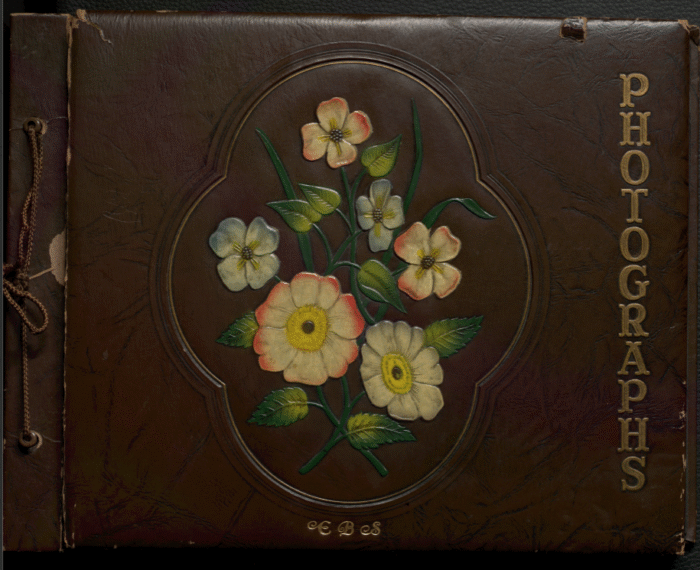
My primary project for this internship is working to digitize Elizabeth Bryans Stallings’ 1942-1946 scrapbook. Or, more specifically, just one of Stallings’ four scrapbooks. This scrapbook details the aftermath of the Fredericksburg flood that occurred while she was a student, as well as horse shows and even sometimes horse-back riding trips across Virginia’s lush forests.
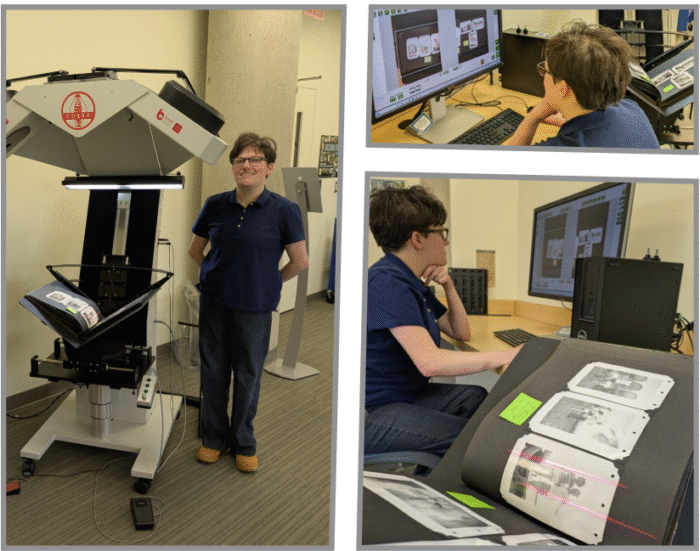
To digitize the scrapbook, we started the scanning process with a rare book scanner called “the Cobra.” There is a specific software program that goes with the Cobra that we use to keep the scrapbook scans organized as well as select the file format and resolution of the scans. While the Cobra scanner is helpful when starting the digitization process for any rare book or scrapbook, it can be quite an interesting challenge to anyone who is starting to learn the scanning process.
An important thing to keep in mind when it comes to publishing these scrapbooks is legal and ethical issues, such as copyright and privacy. An example of this is Ann Gladstone Smith’s scrapbook, which starts at the year 1939 and ends in 1941. In that small but content-heavy scrapbook, there are private letters to friends as well as possible love poems, her class schedule, and grades from those classes. Librarians must consider the content of these scrapbooks, as well as transfer agreements from their owners, before making decisions around digitization and online publication.
Another project that I am also working on is digitizing Goolrick’s History of Fredericksburg, which helped me practice with the accessibility software. Accessibility software helps turn scanned books (and scrapbooks) into items that anyone can access regardless of their abilities. This can include accessibility features like text-to-speech, clear reading order, image descriptions, etc. This is especially important with scrapbooks because in many scrapbooks there could be a variety of artifacts included, such as snippets from newspaper articles, photos, and even once-living things like flowers, locks of hair, or bugs like butterflies. To help with making scrapbooks and rare books accessible, the Special Collections archivists use a variety of accessibility software to generate tags and other accessibility features for scanned book pages and scrapbook pages. However, like with every digital tool, no system is quite perfect. So, archivists often do their very best to manually double-check every page.
These various internship experiences will help prepare me for my goal in eventually working with other future archivists, librarians and researchers. And, most importantly, also show my mastery in being able to quickly and effectively learn skills like the ones I learned from Special Collections, along with how I used those skills in the workplace. Like, for example, using my skills to make the digital library accessible for everyone.
