This post was written by Natalia Ramirez ’25, Special Collections & University Archives Intern, in April 2025.
This semester, I have embraced the exciting opportunity to once again intern at the University of Mary Washington’s Special Collections and Archives, after a phenomenal experience with my internship last Fall semester. Here, I have been gaining hands-on experience in rare book appraisal and digital curation. As an Art History major on the brink of graduation, this internship has offered me the opportunity to blend my passion for historical artifacts with the evolving field of digital humanities.
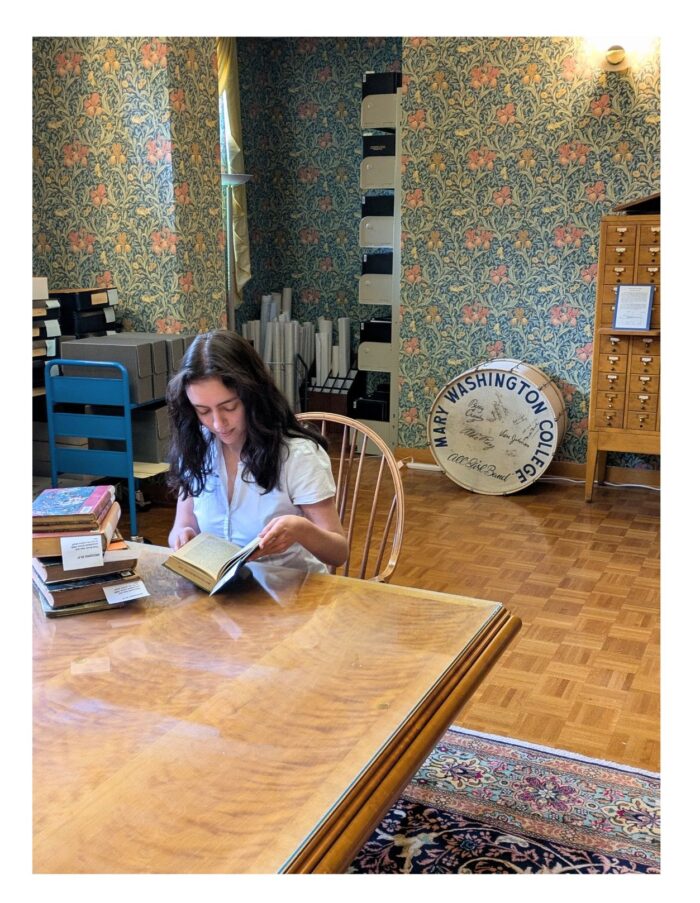
One of my primary projects is appraising rare books housed in the Special Collections and Archives processing room. This involves analyzing and documenting a book’s physical condition, historical significance, and provenance to determine its value and relevance to UMW’s archival holdings. From beautifully illustrated art books to first editions of scholarly works, each piece tells a unique story, and offers something unique to the growing collection.
Through this work, I have developed both more appreciation for, and understanding of the role of historical publications and how they contribute to preserving intellectual heritage.
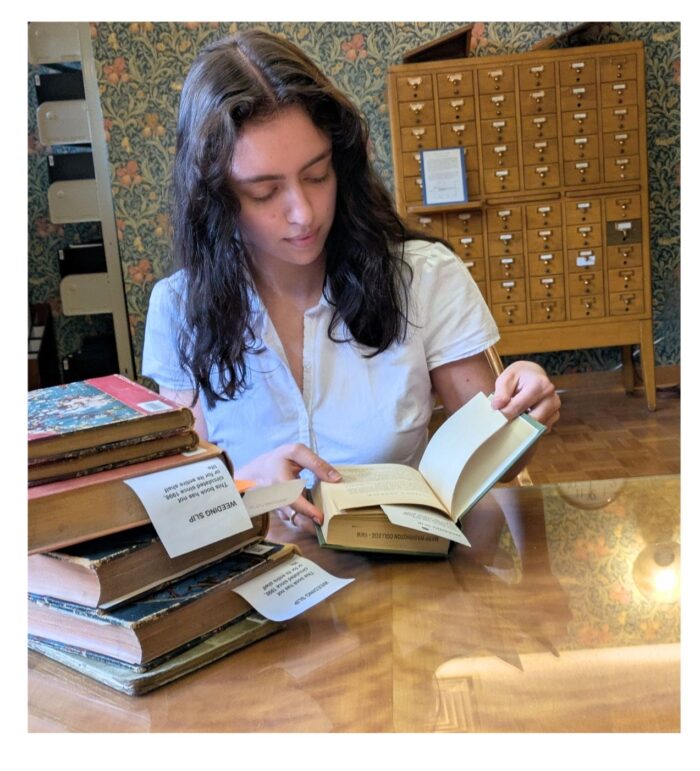
In addition to working with rare books, I am helping to build digital subcollections focused on the Rare Books room’s art historical holdings. This involves categorizing the materials I cataloged last semester, researching their correlation with one another in the context of a specific subcollection’s theme, and ensuring that digitized items are accessible for researchers and students from a public-facing library webpage. These digital collections help to make the collection’s invaluable resource for those studying art history much more accessible, while advertising the importance of rare and fragile materials in cultural and historical research.
As I continue my internship, I look forward to uncovering more hidden gems within the collection and contributing to the accessibility of these resources. This experience has deepened my understanding of both archival work and practical contributions to art history, further igniting my passion for preserving and sharing cultural heritage.
