This post was written by Clementine Worshek ’28, Special Collections & University Archives Student Worker
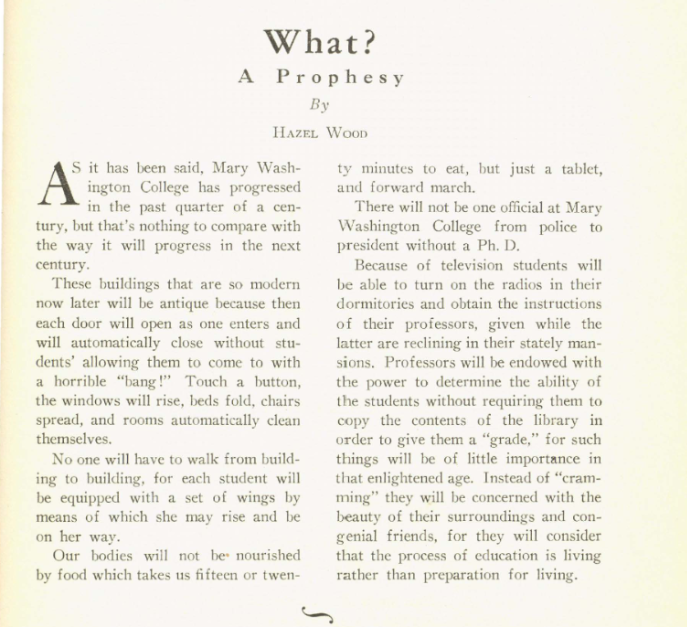
The concept of the television was first mentioned in the Epaulet in 1941, a student-funded literary magazine. While the televisions were mainly used for announcements for students to communicate with professors, it was a large leap in technological innovation, making it easier for students to receive information from the comfort of their own dorm. This was huge at the time, with the student writing: “No one will have to walk from building to building, for each student will be equipped with a set of wings by means of which she may rise and be on her way.” The future of televisions would shift in the following ten years, and a large part of that was thanks to Desi Arnaz.
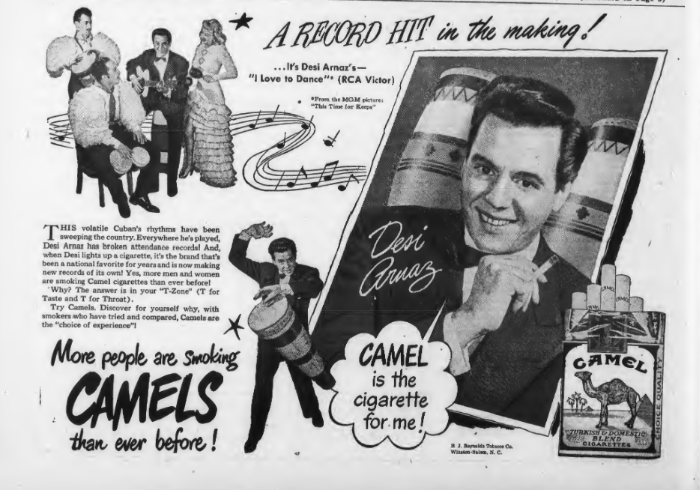
Desi Arnaz was a multi-talented force in the entertainment industry. While he is most well-known for his work on the television show I Love Lucy, his touch in the TV world expands beyond the popular sitcom as an actor, tv producer, and musician. He initially found fame through the formation of his own band, introducing the conga line to dance to Miami, which became a huge hit. In fact, he is featured in an advertisement in Mary Washington’s school newspaper The Bullet from 1947. The ad features him as a musician, writing that “His volatile Cuban rhythms have been sweeping the country”.
While being a great musician, his contribution to the world of television is arguably what he is most known for. He was more than just the character Ricky in the hit 1951 sitcom I Love Lucy, but he revolutionized the sitcom as a genre. He created the “three-camera method” in terms of setting up multiple cameras on a television set at the same time, along with a studio audience. His goal was to find an easier and more interactive way to test their material in front of actual people. While this is considered the standard now, this was revolutionary at the time. Along with his work behind the camera, Arnaz’s character on-screen broke boundaries, as he represented a Cuban character in a sitcom that wasn’t aimed at making his identity the butt of the joke. His portrayal of his character at this time was significant, and an important piece of Latino-American representation in television.
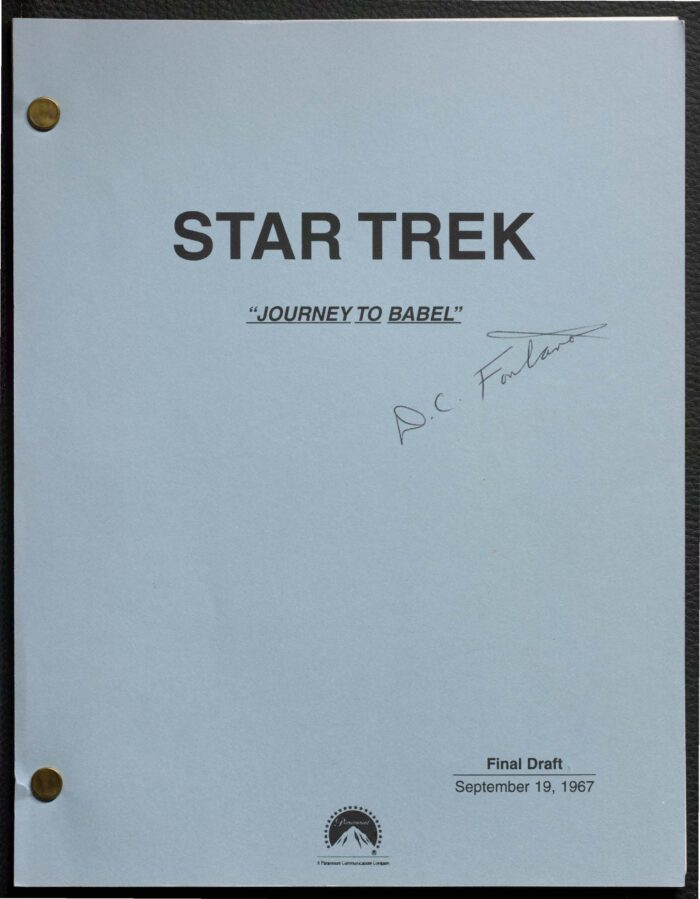
Additionally, Desi Arnaz and Lucille Ball’s production studio Desilu helped produce the original Star Trek series. Mary Washington has a final draft from the tenth episode of season two of the original series titled ‘Journey to Babel’, made in 1967. Though Arnaz left the studio by 1962, his contribution into creating a space in the company where they could take risks in new areas of television are significant. Without their production company, we would not have the Star Trek series we know today.
Overall, Desi Arnaz’s influence in the entertainment industry is spread far and wide, and we have him to thank for the many innovations to TV production and creation over the years.
Learn more about the Great Life of Desi Arnaz at Todd S. Purdum’s lecture on his book Desi Arnaz, The Man Who Invented Television March 10th.
